THE HARD PART“Shipping async messaging, real-time delivery, and live voice agents on the same pipeline, from blank Figma to a Play Store launch in 40 days, entirely in-house, at Krafton's quality bar.”
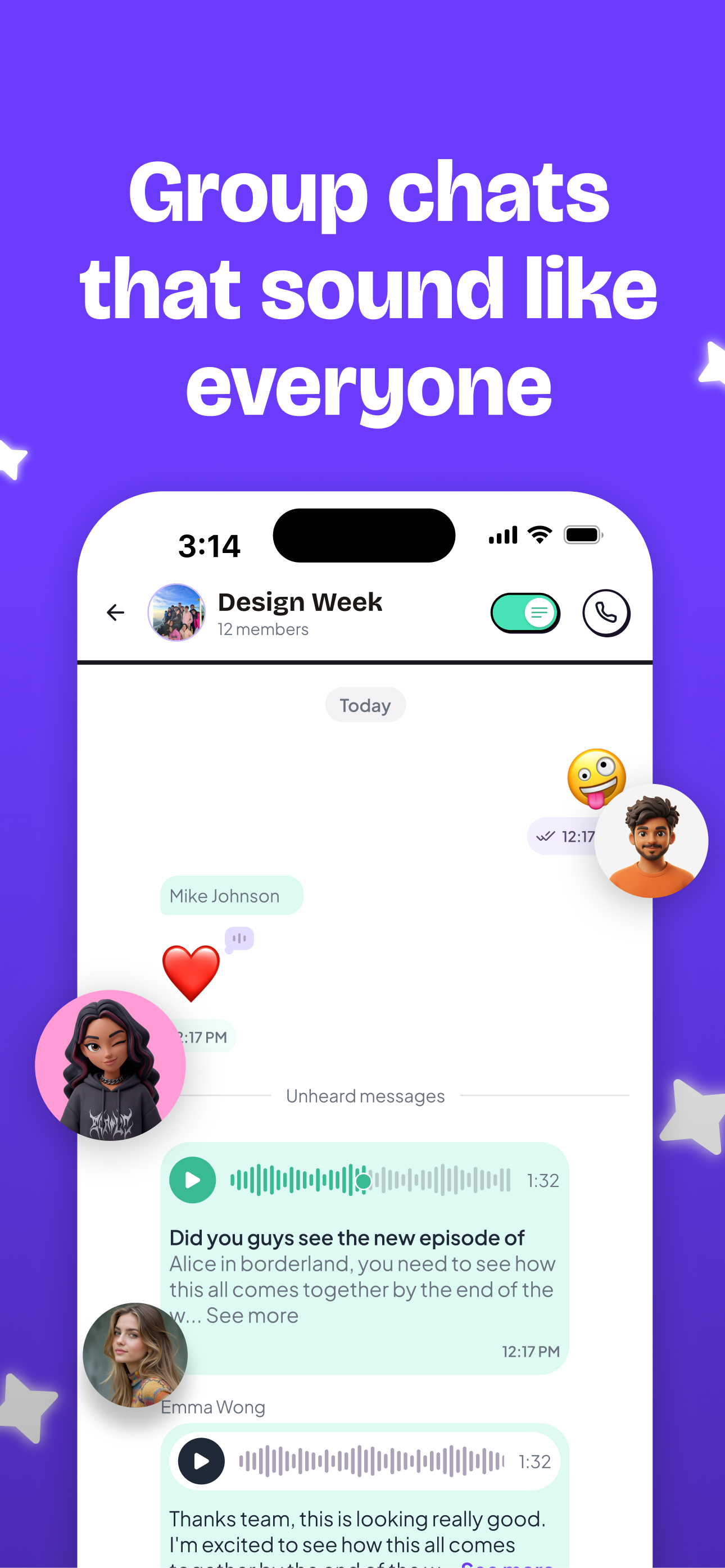
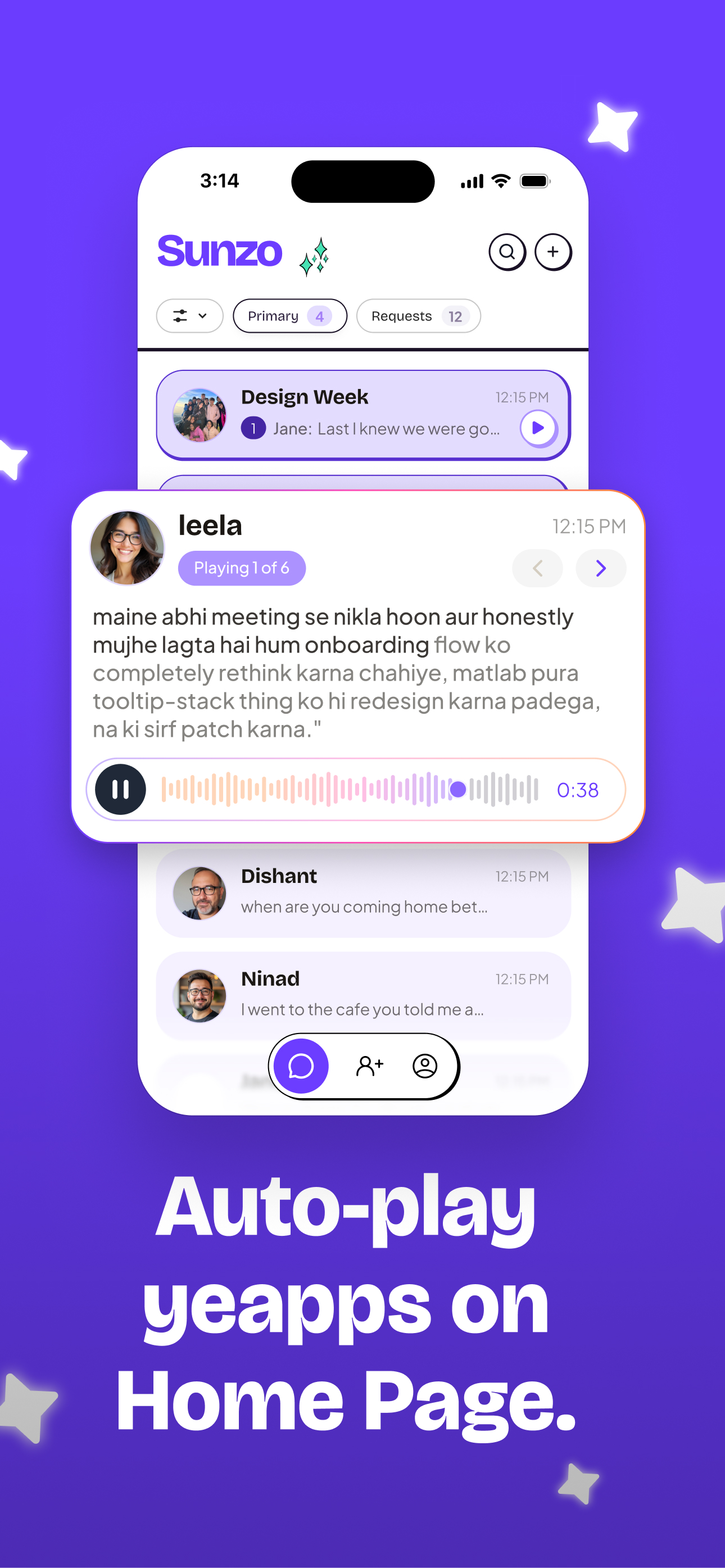
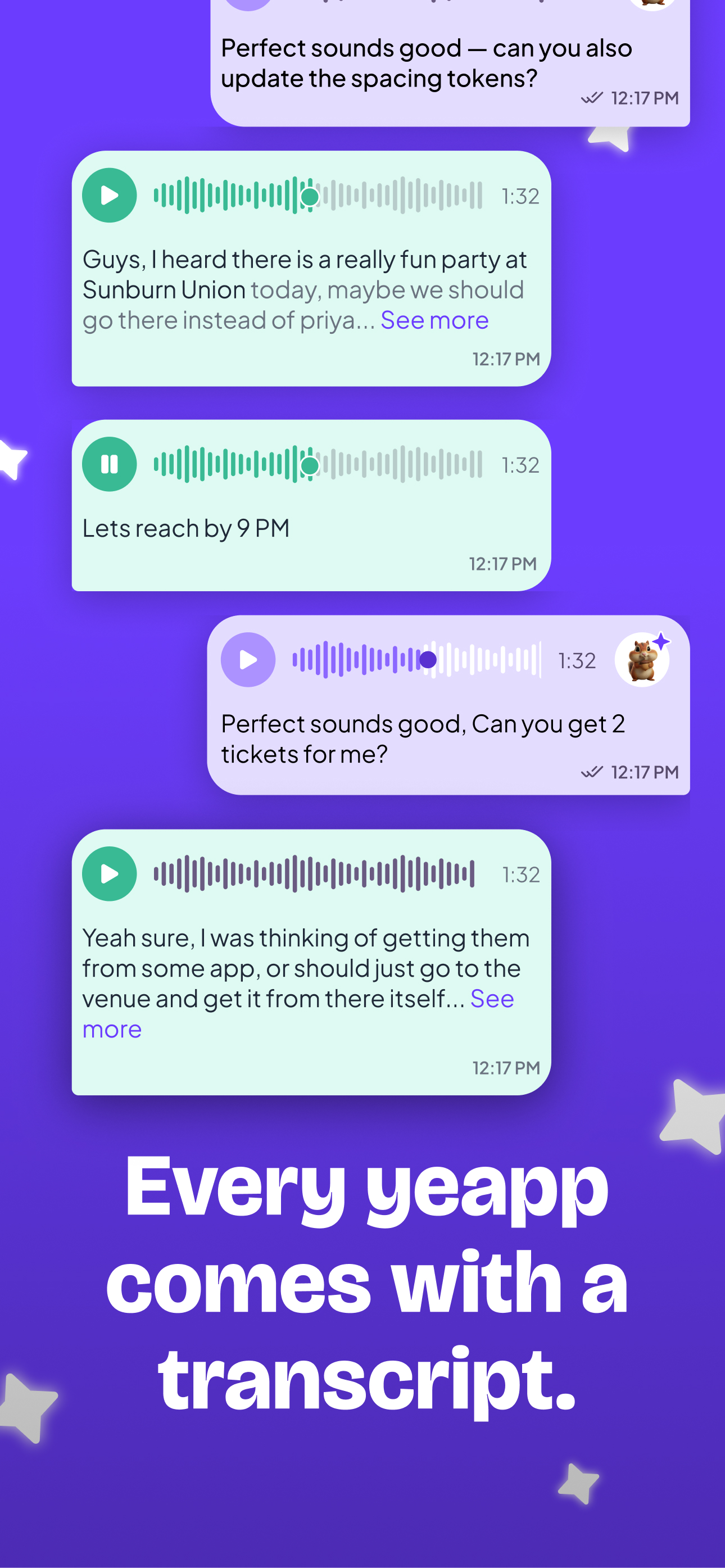
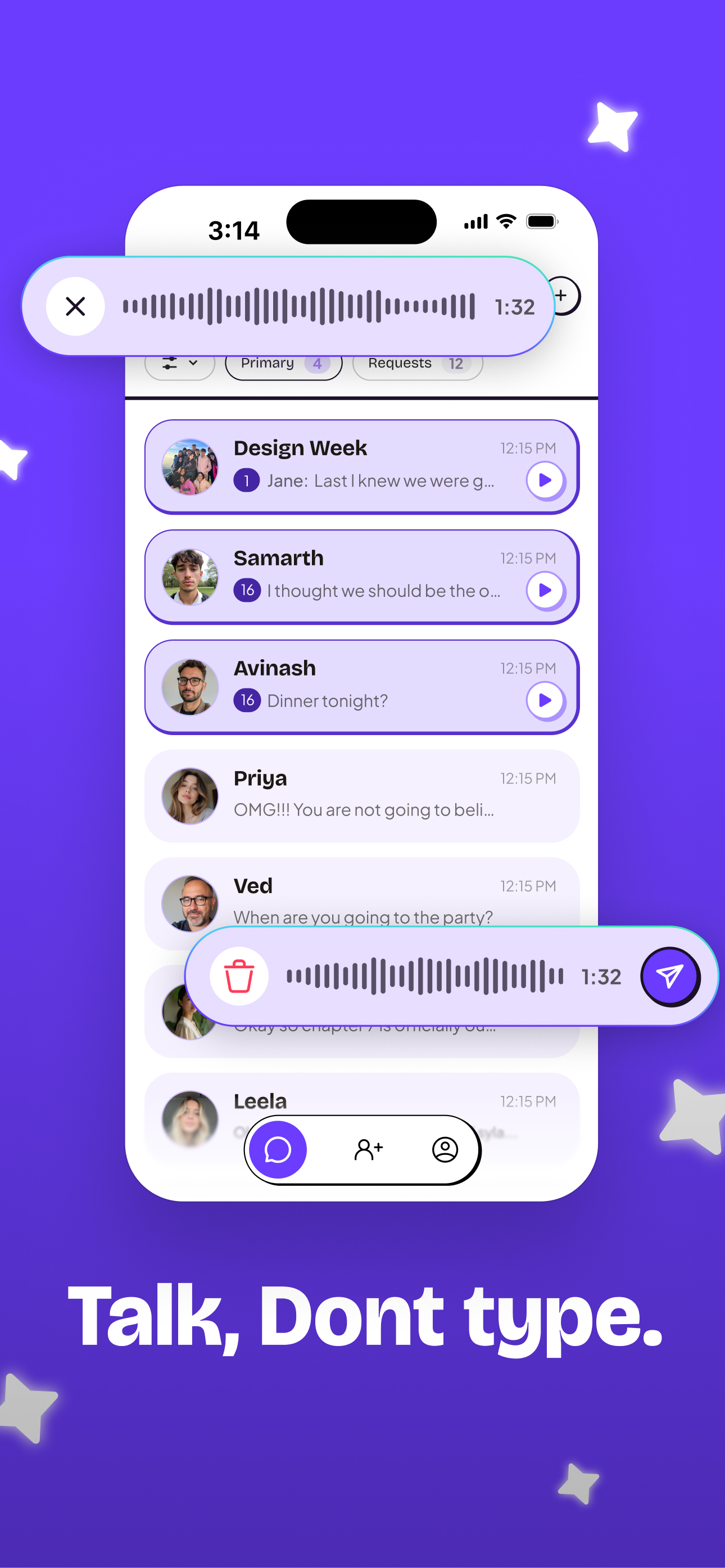
Yeapp is voice at scale: an async voice messaging app built in partnership with Krafton, the $1B+ publisher behind PUBG. The idea is to bring the warmth of voice back to everyday social communication, and to open a surface for AI-native voice experiences while doing it. It is live on Google Play.
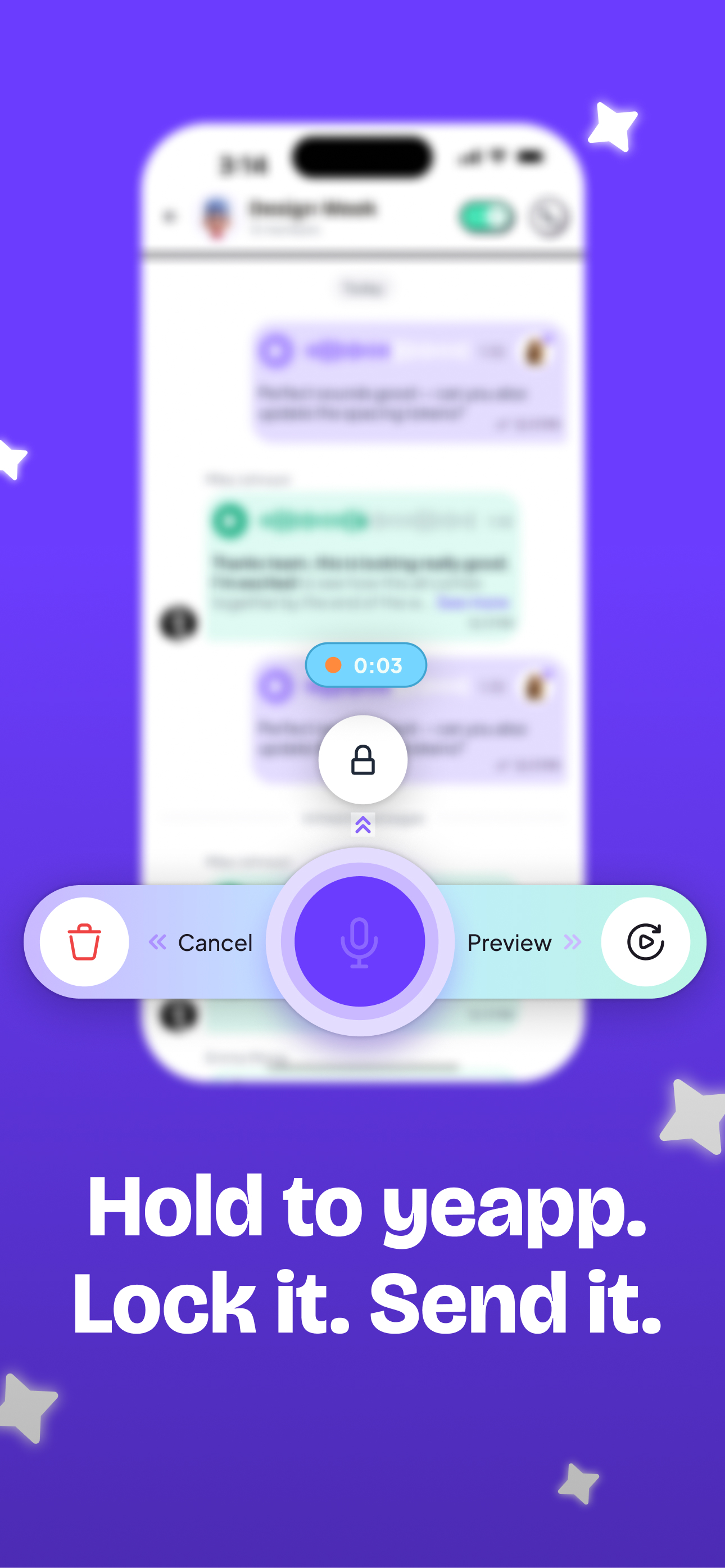
The product is two things at once. For people, it is a fast and simple way to send voice messages between friends and creators: push, talk, send, react. For the platform, it is a runtime for production voice agents that listen, reason, and respond in real time. Both run on the same backbone, one streaming pipeline that carries human-to-human messages and live AI conversations alike.
The defining constraint was speed. We went from a blank Figma to a public Play Store launch in a 40-day sprint, which forced opinionated architectural calls early: a streaming voice ingest path that keeps up with real users, an async messaging model that survives flaky mobile networks, a voice-agent runtime that can be dropped into any conversation, and observability tight enough to debug a low-latency audio stack at 2am.
Everything was built in-house, with no external product or design agencies. I co-led the product with our Krafton partners and led engineering end to end: the architecture, the voice pipeline (ingest, transport, transcription, TTS, agent orchestration), the cloud and data infrastructure, the API surface for the mobile client and the agent runtime, and the launch and on-call discipline that got us to the Play Store in 40 days. Marketing site: yeapp.live. Play Store: play.google.com/store/apps/details?id=com.kinvrs.yeapp.