THE HARD PART“Making AI transcription trustworthy. The async ASR and LLM pipeline feeds a word-level editor with audio sync, versioned drafts, and optimistic locking, so reviewers spend their time correcting the model instead of fighting the tool.”
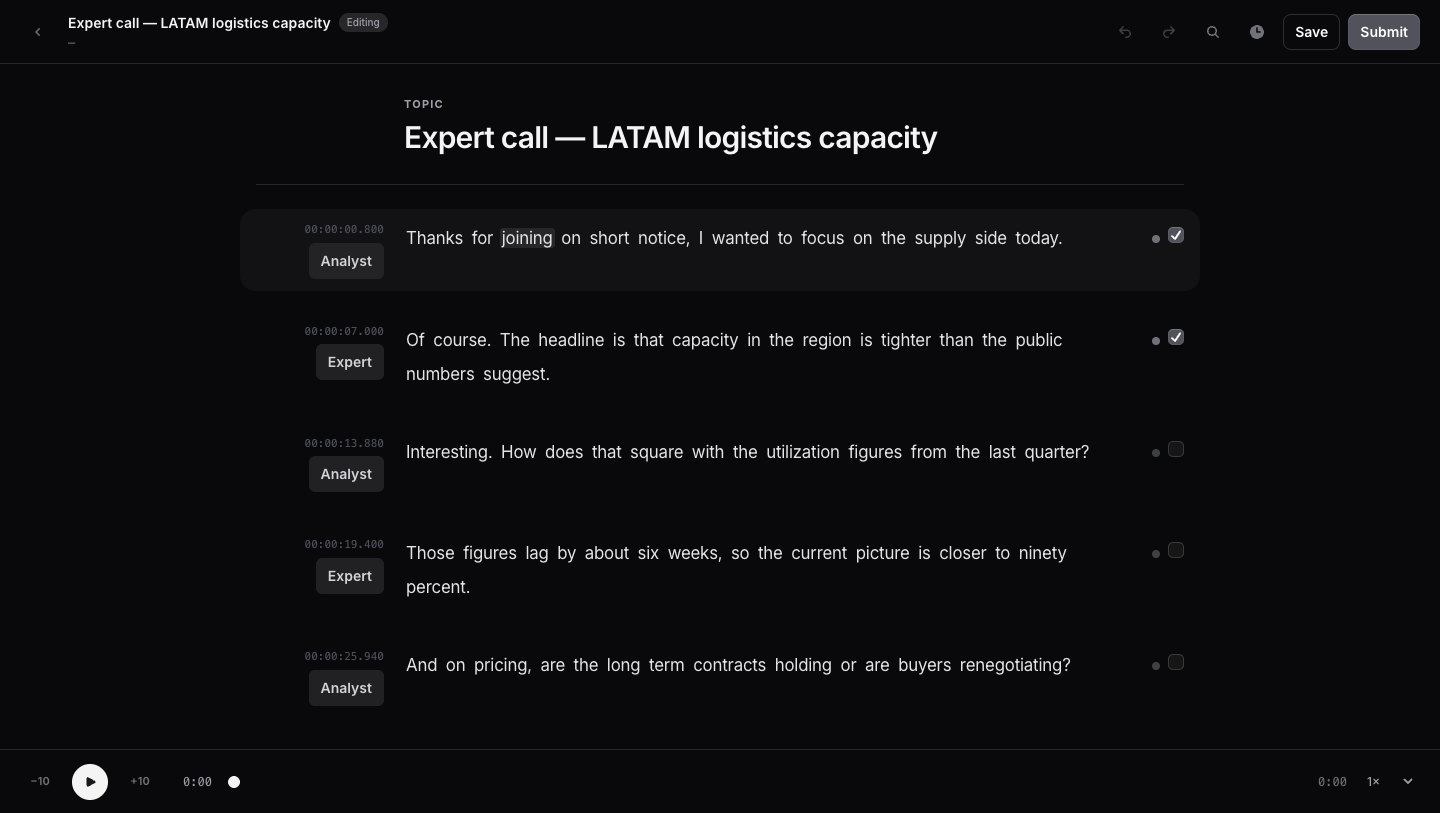
Cadence Translate turns expert calls and multilingual audio into transcripts a hedge fund can actually rely on. The model does the fast first pass; people make it trustworthy. The heart of that human stage is MegaEditor, the piece I enjoyed most: a full-stack transcription editor (FastAPI + React 19) with word-level editing on per-word timestamps, audio that follows the text as you click, speaker assignment, segment review, undo/redo, drafts that save themselves, version snapshots, and optimistic locking so two editors can't silently overwrite each other.
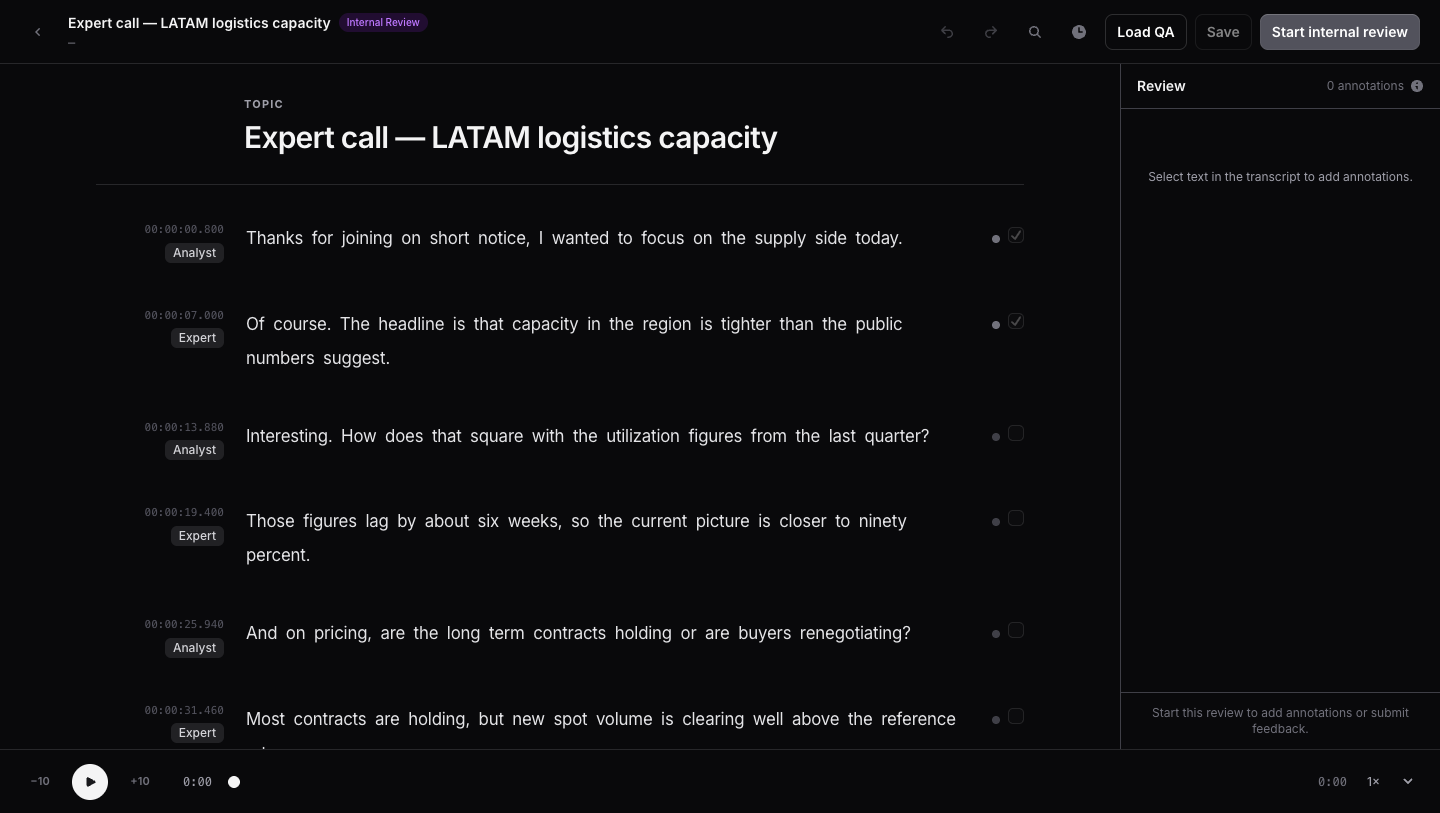
Editing is only half the human stage. Transcripts move through a RECEIVED, EDITING, REVIEWING, APPROVED, COMPLETED workflow with separate roles for editors, reviewers, and internal QA, and review mode adds an annotations panel so a reviewer can mark up the transcript itself before anything ships.
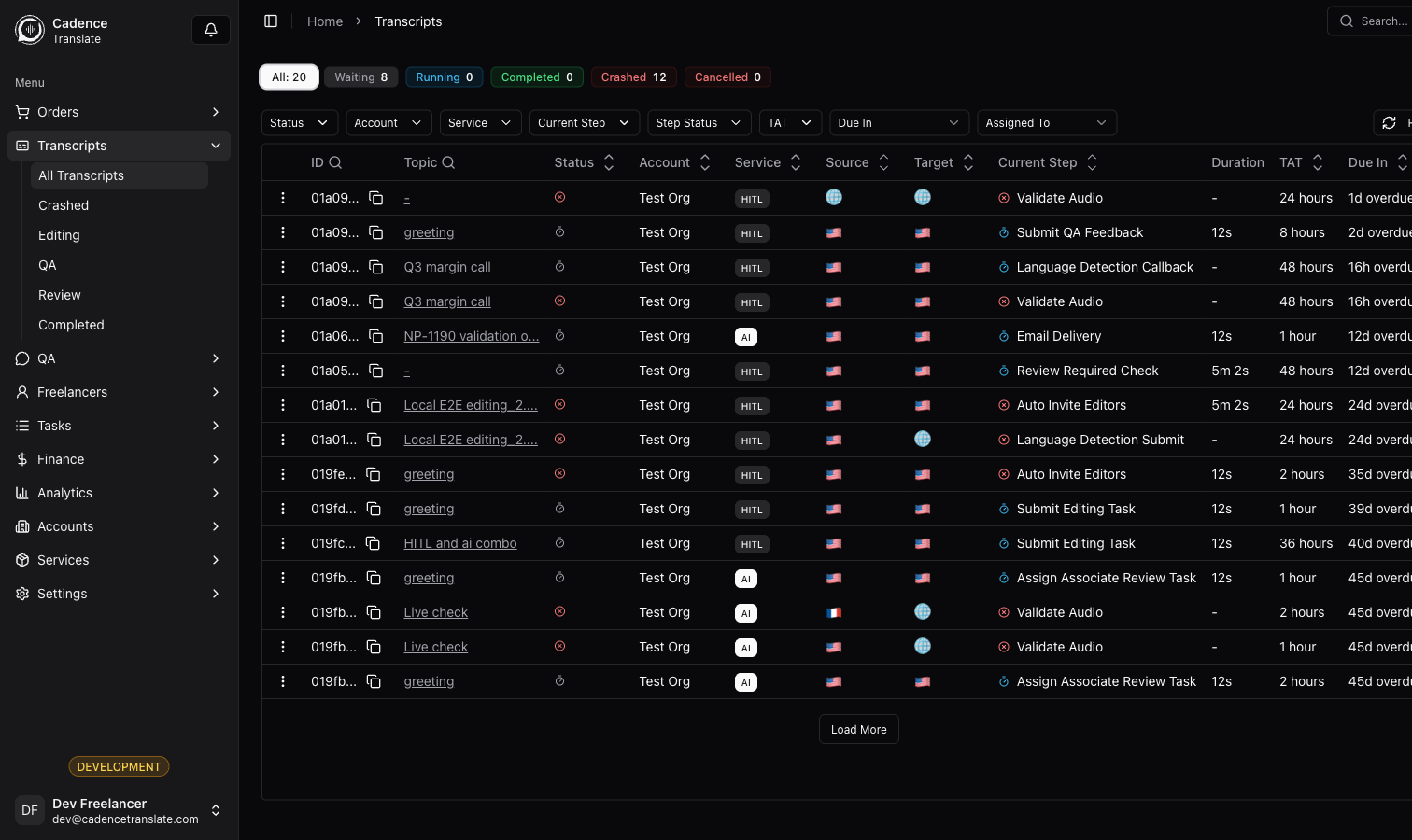
An order comes in through the API and the audio runs through ASR and LLM post-processing for grammar and entity recognition, step by step through a 41-step pipeline that operations can actually see: every transcript shows its current step, its status, its turnaround target and how far it is from due, filterable across the whole book of work.
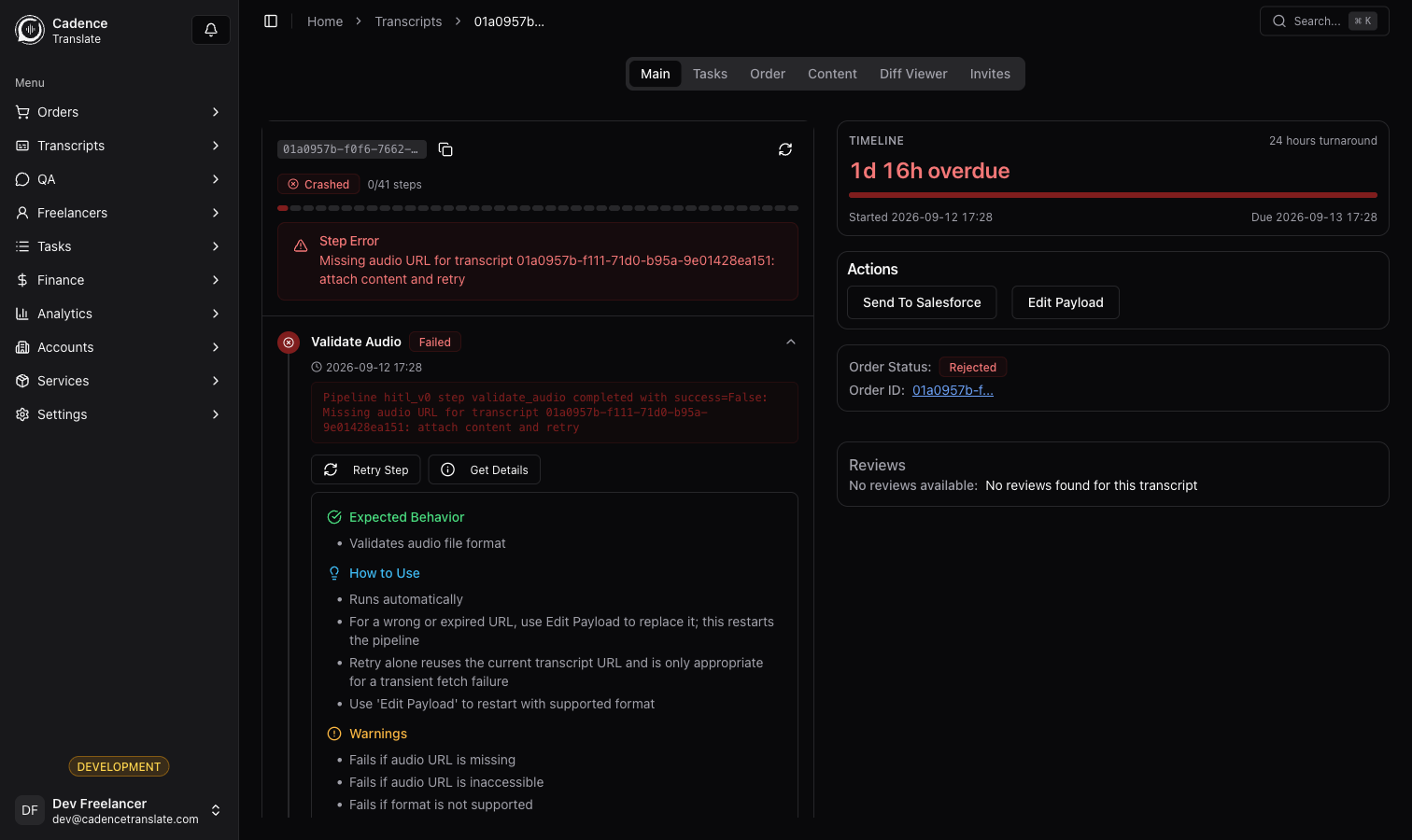
When a step fails, the transcript page says so in plain terms: the exact error, what the step was supposed to do, how to retry safely, and when a retry is the wrong move. Diagnosing a stuck job takes a minute of reading instead of a dig through the logs.
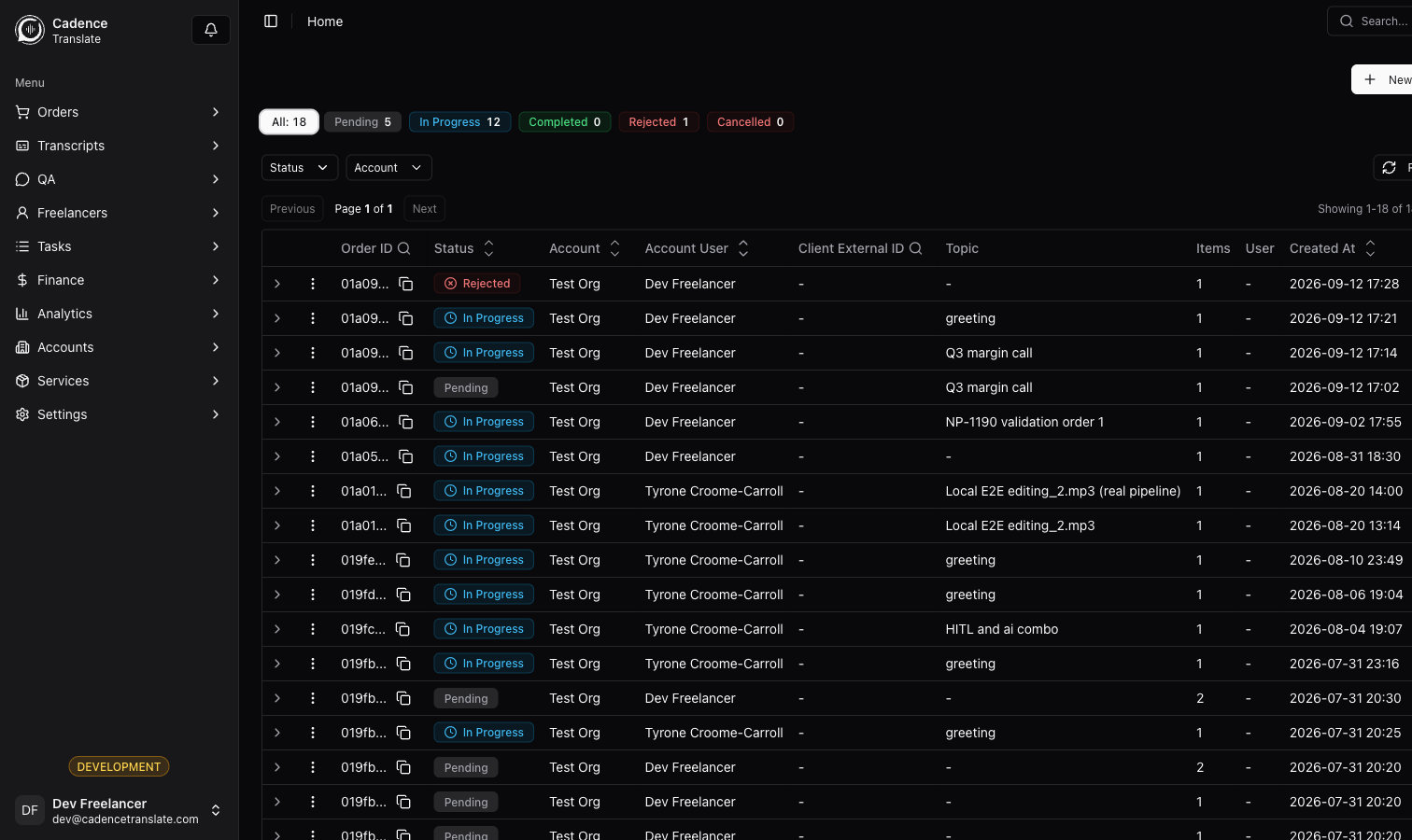
Around the pipeline sits the operations surface: orders tracked from pending through in progress to completed, per account and per user, so the team runs the whole book of business from one screen instead of a spreadsheet.
The core platform is a FastAPI monolith organized by domain: orders, freelancer assignment, webhook callbacks, and delivery each live in their own module, with PostgreSQL, Redis, and Dramatiq workers running the async pipeline stages, and a Next.js 15 dashboard on top for the operations team. Cadence itself is a language services provider to the global business and investment community, which is why the transcripts have to be right.